

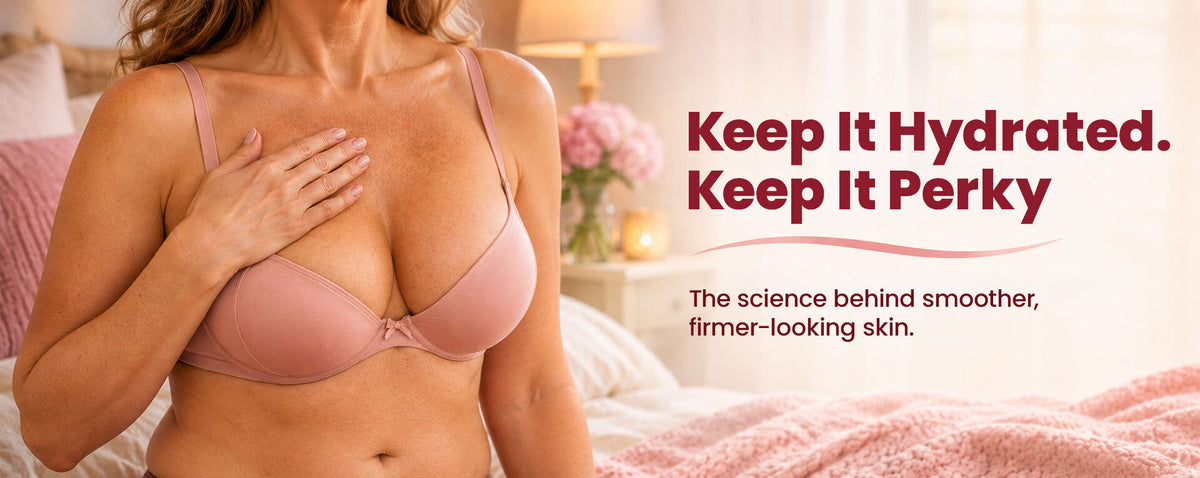
You take care of your face. You likely moisturize. You drink water. You notice when your skin feels dry. Yet breast and chest skin often gets ignored. Then one day, the texture looks different. The area looks less smooth. Support looks softer. People often blame age and move on.
Hydration plays a clear role in how breast skin looks. When skin stays hydrated, the surface looks smoother. Skin looks fuller-looking. The chest area looks more refined. Over time, consistent hydration supports a firmer-, perkier-looking appearance without invasive steps.
This guide keeps the focus on skin and routine. You will see what hydration does, why this area needs it, and how to build a simple system you can stick with.
Why Hydration Matters for Breast and Chest Skin
Hydration affects how skin behaves on the surface. When the outer layer holds enough moisture, skin looks softer. Light reflects more evenly. Texture looks calmer. Dryness does the opposite. Dry skin shows fine lines faster. Dry skin looks uneven. Dry skin can feel tight.
Breast and chest skin tends to dry out faster than people expect. The skin can be thinner. Oil glands can be fewer. That matters because oil helps slow water loss. When the area lacks both oil and hydration, the surface can look dull. Texture can look rough.
There is also friction. Bras. Shirts. Sleep positions. Seat belts. Daily movement. Those small things add up. Hydration supports comfort. Comfort supports consistency. Consistency supports how skin looks over time.
Why Breast Skin Loses a Firm-Looking Appearance Over Time
Skin changes for simple reasons. Gravity plays a part. Daily motion plays a part. Skin stretches and relaxes all day. Over years, the surface can look less supported.
Breast skin also differs from facial skin. The face often gets daily care. The chest often does not. You might cleanse and moisturize your face twice a day. You might apply sunscreen. You might use serums. Then the routine stops at the neck. Many people do that. No shame. It is common.
Sun exposure also matters. Chest skin often sees sun during daily life. The face gets sunscreen more often than the chest. Over time, the chest area can show dryness and texture changes sooner.
Weight shifts can change how skin looks. Pregnancy can change how skin looks. Sleep habits can change how skin looks. Posture can change how skin looks. None of this means something went wrong. It means the skin has a story. Hydration supports how the next chapter looks.
How Hydration Supports a Firmer-, Perkier-Looking Appearance
Firmness often starts as a surface issue. A hydrated surface looks smoother. When the surface looks smooth, the area often looks more supported. It is not a structural change. It is a skin appearance change.
Moisture fills the outer layer. Skin cells sit closer together. The surface looks more even. When skin holds water, the area can look fuller-looking. Fine texture looks softer. Creases look less sharp. This is one reason hydration gets tied to the look of firmness.
Hydration also supports skin feel. When skin feels comfortable, you touch the area less. You scratch less. You avoid rubbing through the day. That helps keep the surface calm.
Here is a simple way to think about it. Dry skin shows everything. Hydrated skin softens what you see.
Why Consistency Matters More Than a One-Off Fix
Most people do not need a complicated routine. They need a routine they repeat.
Hydration does not last forever. After a shower, skin can lose water fast. After a dry day, skin can feel tight. After a long night, skin can feel different. If you hydrate once and stop, the result fades. The skin returns to its baseline.
Consistency keeps the surface in a better place. Weekly care supports maintenance. Twice-weekly care supports refinement. Three times weekly supports long-term commitment. The main point is repetition. Skin responds to repeated care more than random bursts.
A routine also protects your mindset. You stop scanning for instant change. You focus on steady improvement. That shift helps people stay with the process.
Why Patch-Based Skincare Supports Extended Hydration
Creams and lotions work, yet they have limits. They absorb quickly. They rub off on clothing. They can feel messy. Then the contact time ends.
Patch-based skincare keeps skin-conditioning ingredients in contact with the skin for longer periods. This supports extended hydration. The patch helps slow evaporation. It helps hold moisture against the surface. It keeps the routine simple. Apply. Wear. Remove.
Extended contact matters for delicate areas. The breast and chest area can benefit from longer wear because the skin can dry out and show texture changes. Longer hydration contact supports a smoother-looking surface.
Many people prefer patch-based routines at night. Night routines feel easier. You have fewer distractions. You move less. You sleep. Then you wake up and the skin feels more comfortable.
Building a Hydration-First Breast Skincare Routine
A breast skincare routine should feel normal. The goal is not perfection. The goal is consistency.
Start simple. Pick a pace you can keep.
Essential routine, one use per week
- This suits beginners.
- This also suits maintenance.
- You build the habit.
- You support weekly hydration.
- You keep the skin comfortable.
Ritual routine, two uses per week
- This suits people who want more consistency.
- You support smoother-looking texture over time.
- You support a firmer-looking appearance through routine care.
- You create a steady rhythm.
Signature routine, three uses per week
- This suits long-term commitment.
- You focus on deep hydration and steady maintenance.
- You support the look of refined, toned-looking skin.
- You treat breast care like facial care.
CHERRY GLAM BY DR. CURVY is designed around this routine approach. The patch-based delivery system helps skin-conditioning ingredients stay in contact with breast and chest skin longer. The focus stays on hydration, comfort, and consistency. The goal stays appearance-based. The routine fits real life.
What Hydrated Breast Skin Can Look Like Over Time
People often notice the feel first. Skin feels softer. Skin feels less tight. The surface feels smoother.
Then the look starts to change. Texture looks more even. The area looks more refined. Some people describe the chest area as looking more supported. Some people describe a firmer-looking appearance. Some people describe a perkier-looking look. Those words still tie back to surface hydration and routine consistency.
Results vary. Skin type matters. Lifestyle habits matter. Routine frequency matters. The strongest pattern stays simple. Consistent hydration supports the appearance of better-looking skin.
Hydration as the Foundation of Breast Skincare
Breast skin deserves care. Chest skin deserves care. You do not need invasive steps to support how this area looks. You need a routine that fits your schedule and your life.
Hydration supports smoother-looking skin. Hydration supports a more refined surface. Over time, hydration supports the appearance of firmer-, perkier-looking skin through consistent care.
If you want to start, start small. Pick a routine. Stick with it. Give your skin steady care.
Frequently Asked Questions
Why does hydration make skin look firmer
Hydration supports surface fullness. The surface looks smoother. Texture looks softer. That often reads as firmer-looking skin.
Is breast skin different from facial skin
Breast and chest skin can be thinner. Oil production can be lower. The area also gets less daily care.
How often should you hydrate breast skin
A consistent routine supports better skin appearance. Frequency depends on your goals and your schedule.
Does hydration support a lifted-looking appearance
Hydrated skin looks smoother and fuller-looking at the surface. This can support a more lifted-looking appearance.
Why does the chest area show texture changes
The area faces daily movement and gravity. Sun exposure and dryness can also affect texture.
Hydration supports how breast skin looks and feels. A routine-first approach builds visible confidence through steady care.
Share:
Why Breast Skin Looks Less Firm and How Skincare Can Help